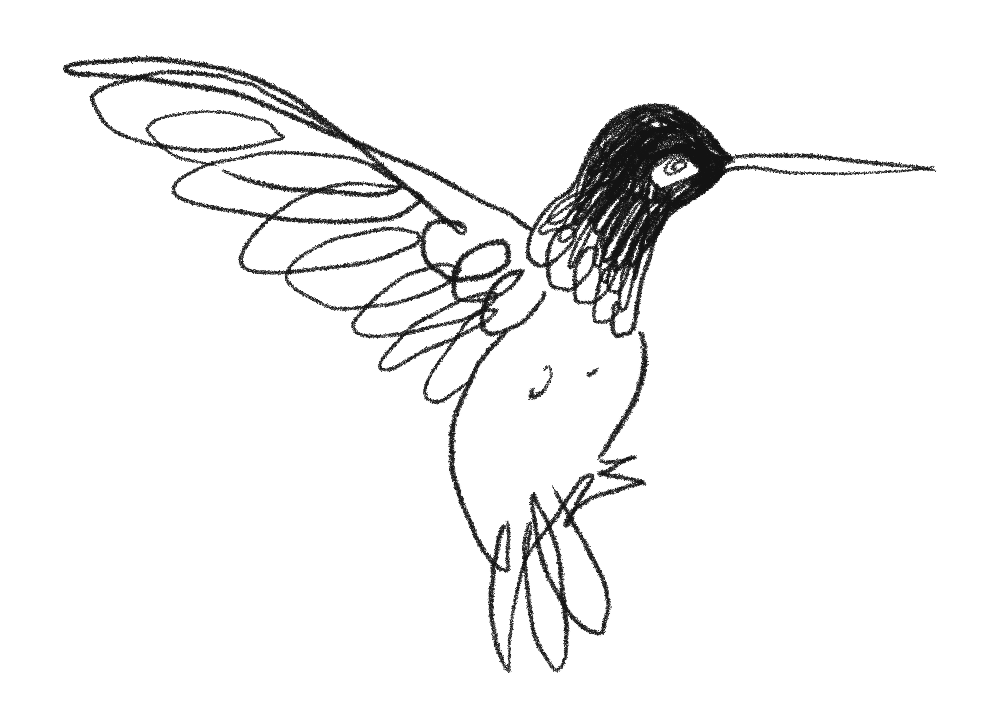
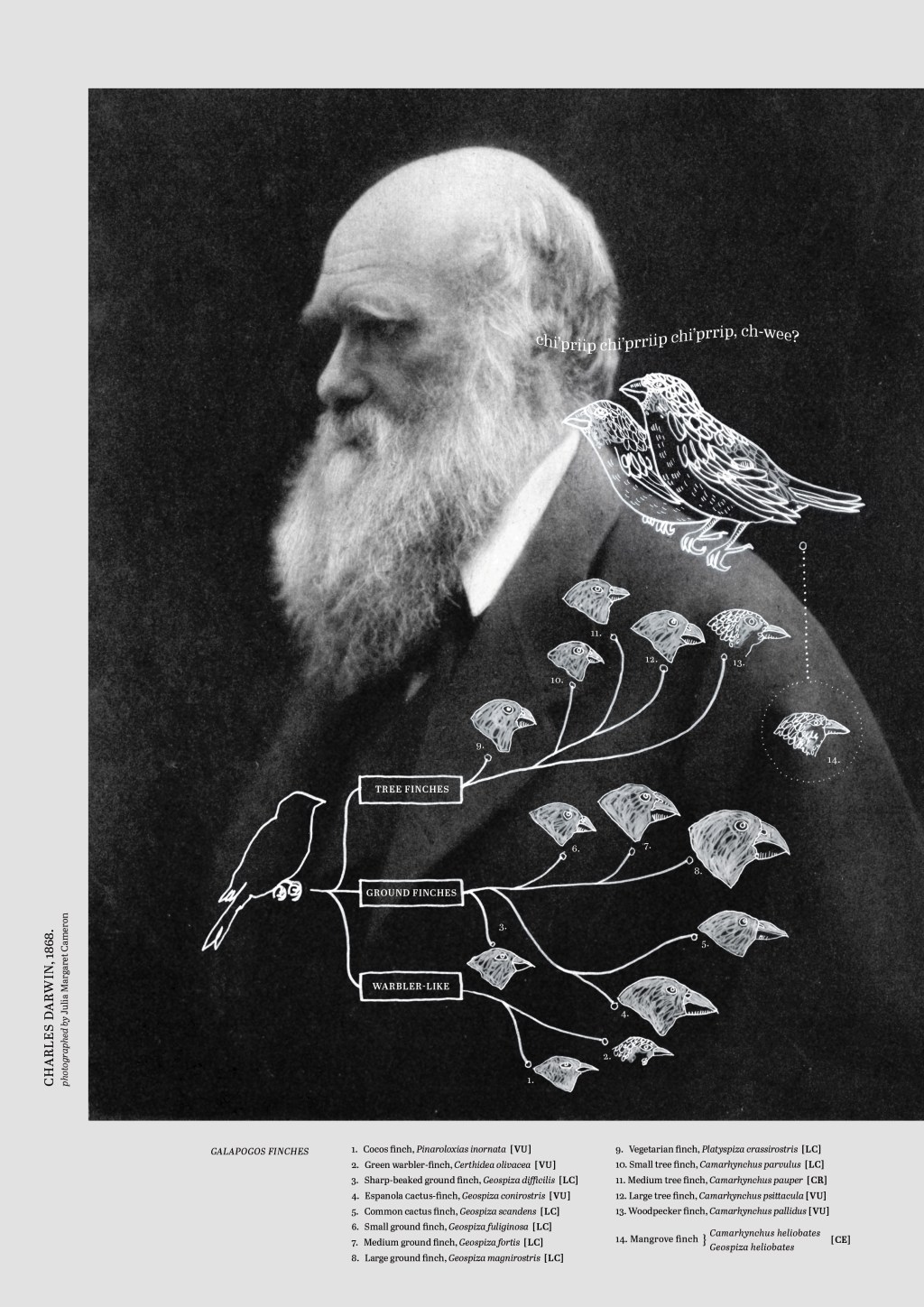
Geospiza heliobates / Camarhynchus heliobates
Mangrove finch
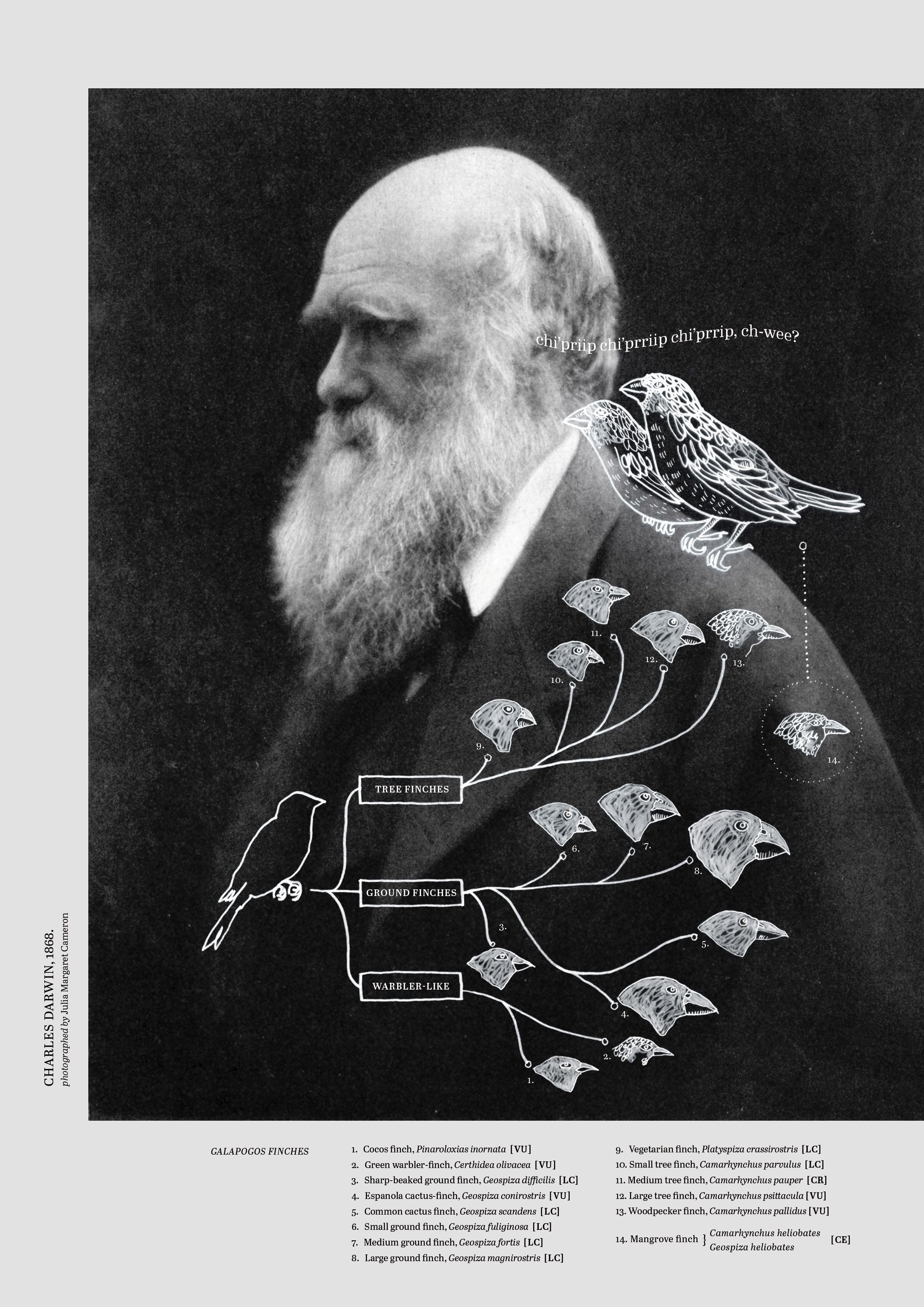
Scientists and artists know that the way to handle an immense topic is often through close attention to a small aspect of it, revealing the whole through the part. In the shape of a finch’s beak we can see all of evolution.
Ursula Le Guin, reviewing Tsing’s Mushroom at the End of the World
.
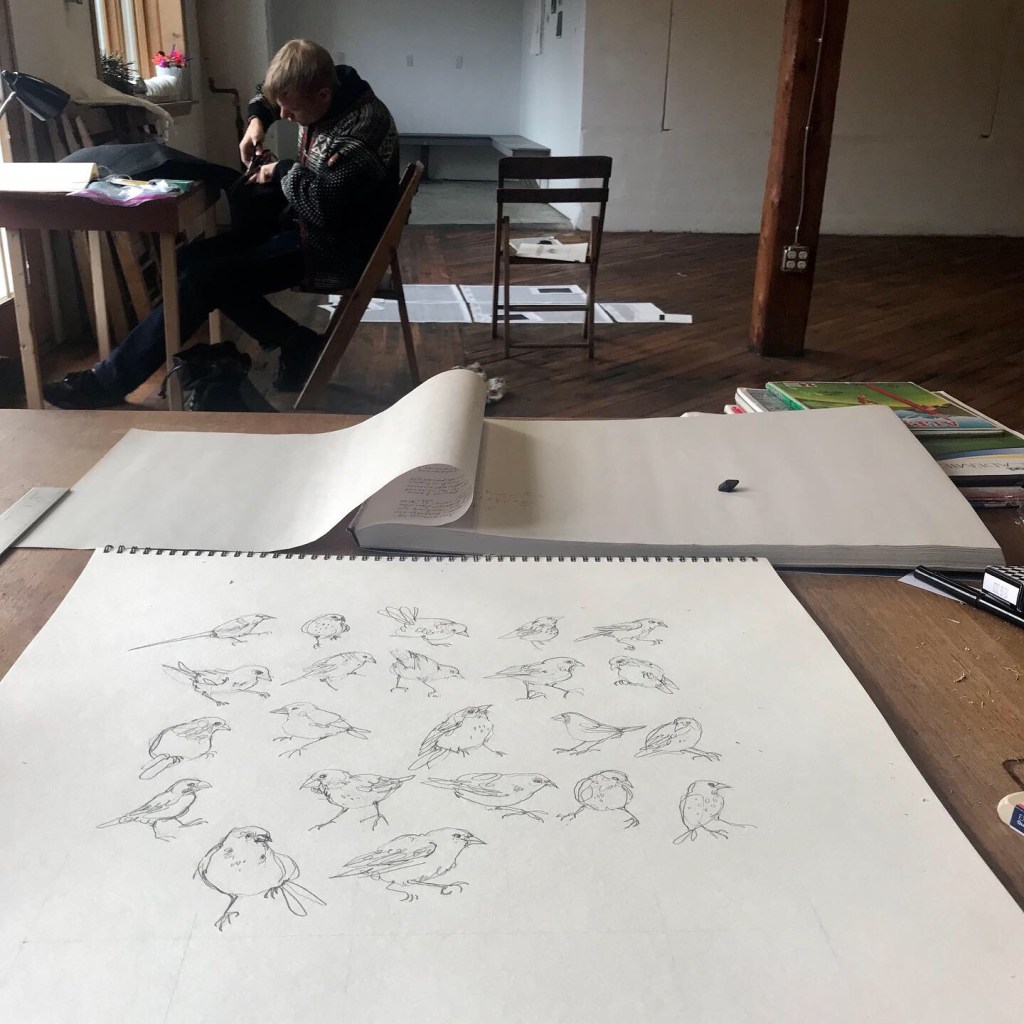
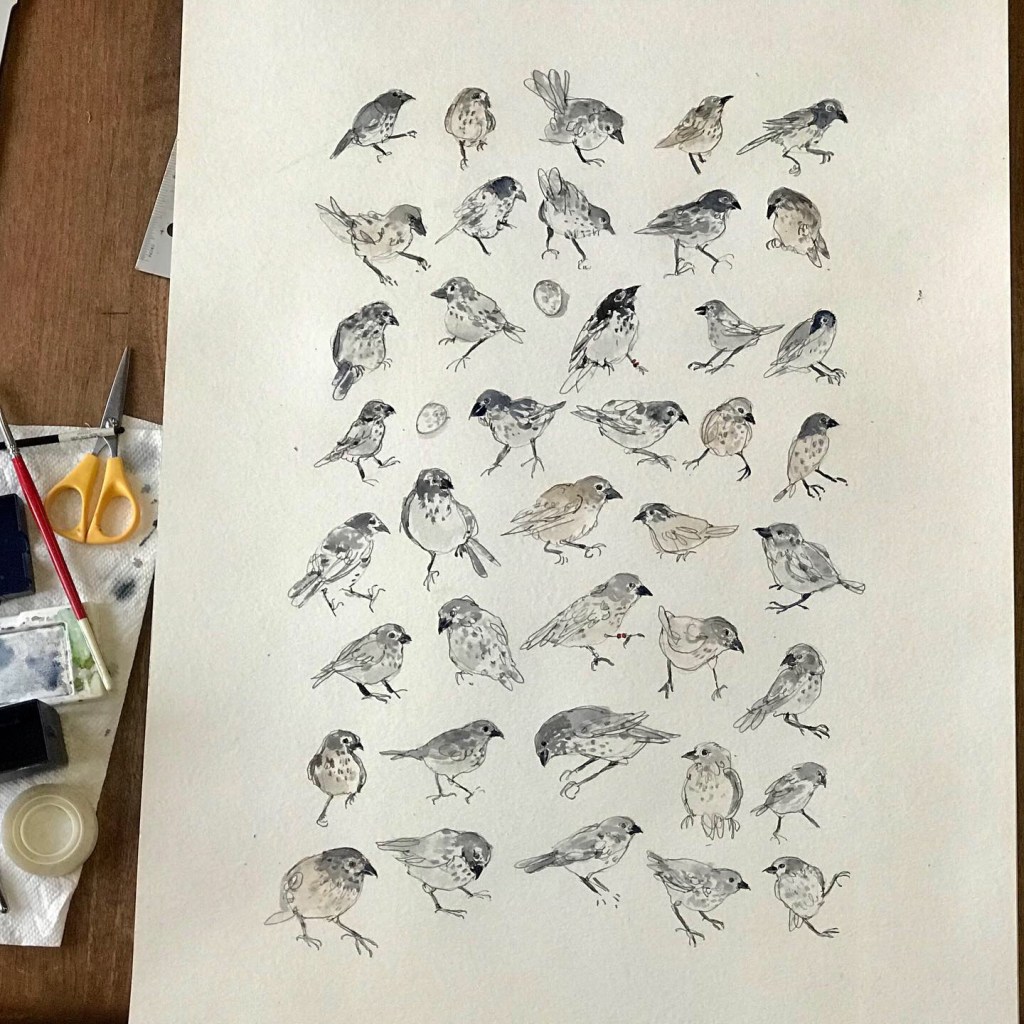

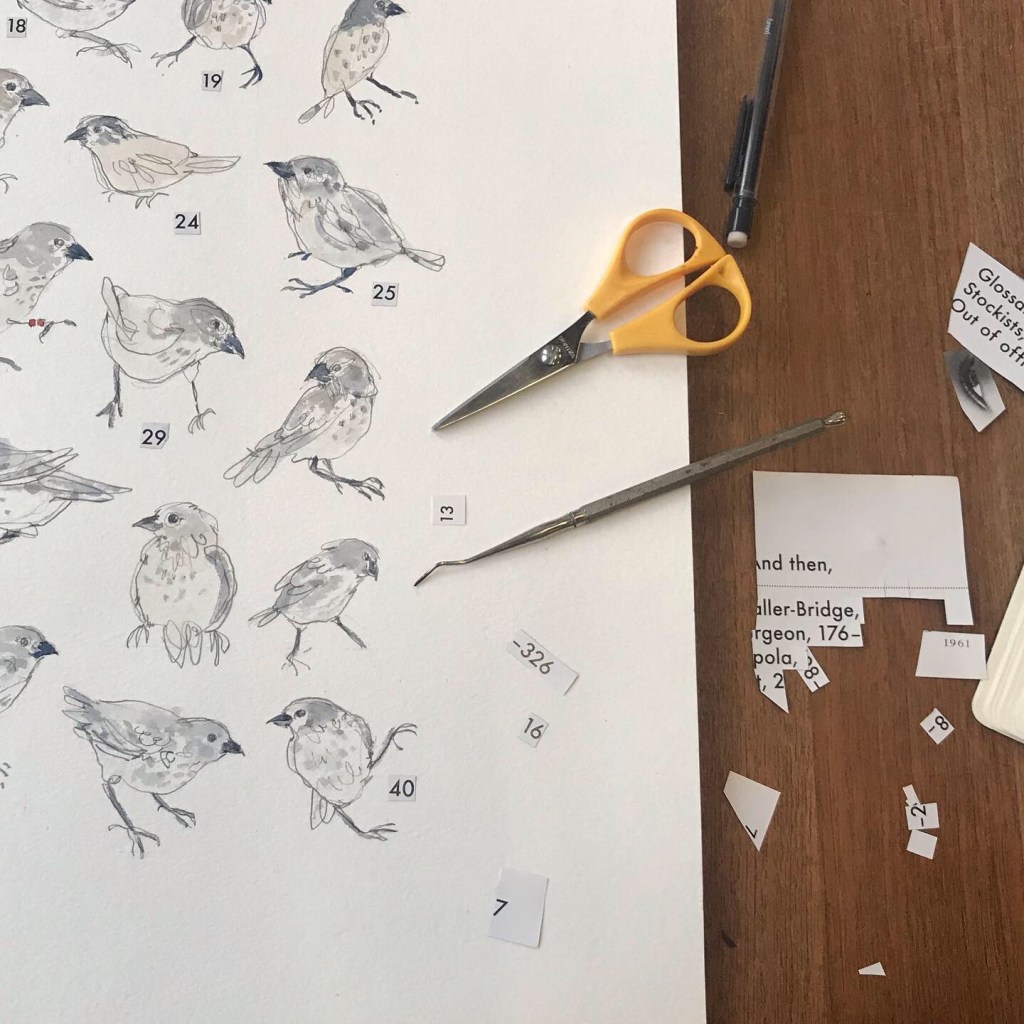
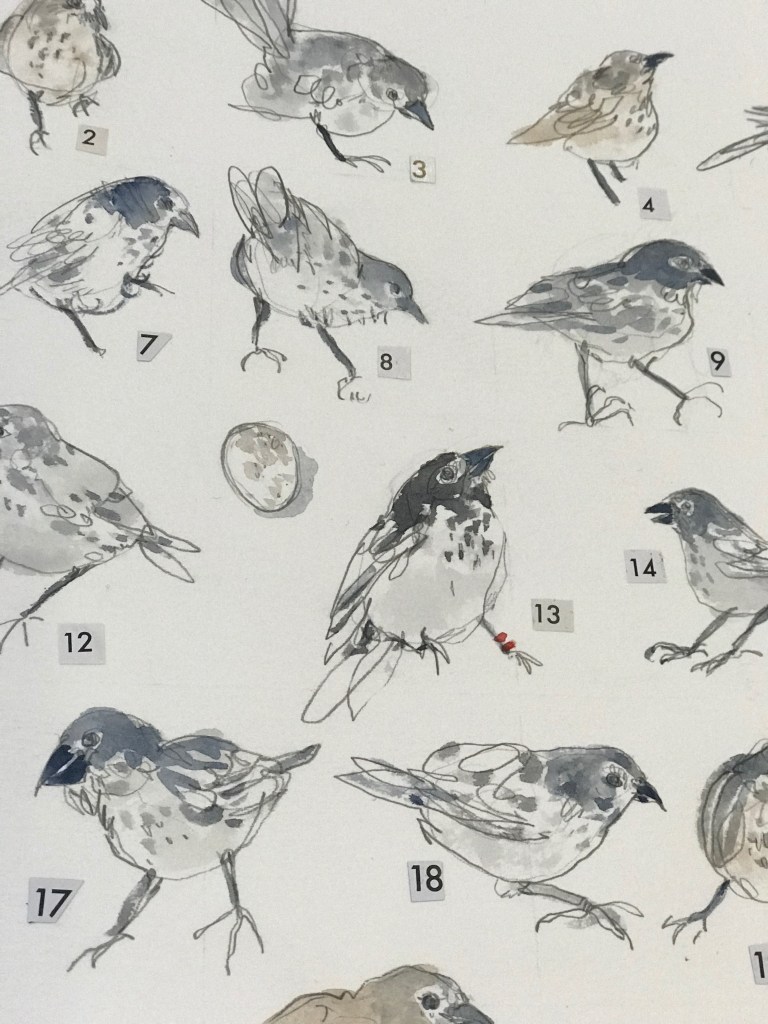
As few as 40 mangrove finches remain in two small mangrove forests in the Galápagos. This accounts for the entire world population. To communicate the tiny scale of this critically endangered population, I sketched 40 finches (from photographs online) in the time it took to listen to four of the Australian Museum‘s HumanNature podcasts.
Two of my drawn finches feature red bands on their legs (see detail, no. 13); since 2014, conservationists have released captive bred finches into the remaining wild colonies, to increase flock numbers and genetic diversity. Two of these fledglings have since been sighted in the wild. Precarious hope.
In one of the podcasts Timo and I listened to, as I drew the finches, multi-species ethnographer Deborah Bird Rose concludes her talk, which primarily addresses anecdotes of hope and recovery: “I’ve chosen to praise life, and in this mode grief may be transmuted into advocacy.”
 PRECARIOUS BIRDS
Leave a comment